We sacrifice by not doing any other technology, so that you get the best of Magento.

We sacrifice by not doing any other technology, so that you get the best of Magento.

    How Magento 2 Hosting is better than its previous versions?

    Magento is used by millions of online stores around the world. Its out-of-box features make the entire process smooth. Developers love Magento as it’s an efficient way to manage time particularly when they are using the right Magento 2 hosting environment. Finding a reliable hosting platform for your Magento 2 is not an easy task.

    Our article will help you in finding a reliable and fast Magento 2 hosting provider for your business.

    Did you know?

    With optimized Magento hosting, you can improve your Magento store speed by 200%

    An Unoptimized Magento 2 Hosting will lead to the following issues:

    • Not meeting the minimum requirements for hosting Magento 2.
    • Installation of incompatible PHP version on the server.
    • The server has incompatible Apache or NGINX configurations.
    • Lack of necessary PHP extensions.
    • No regular updates or service on the server’s operating system.
    • The operating system has outdated patches.
    • Enabled incorrect files & folder.
    • Page loading takes time.
    • Issues on a server level.

    What factors should be considered for choosing the right Magento 2 hosting?

    There are a lot of options available that may appear to be a good fit for your store but you need to evaluate your options based on the following factors:

    Server Uptime

    Server uptime does not remain operational 100 percent of the time but having a guarantee of 95% uptime is a good place to start. It makes sure that your Magento 2 store is functioning smoothly and you aren’t missing any of your customers.

    Improved Response Time

    Nobody likes to visit a slow-performing website. Your store conversion rate will increase with the right server as it will give faster response time and it will also build trust among the customer.

    Server position

    The location of your server is very important as ensures better SERP rankings, latency, and performance of your target audience. The close server gives a faster page load and enhanced user experience.

    Customer Support

    Server error can be very frustrating and you might also miss sales and may risk SERP positions if your customer support team is not available to resolve it. Always check that your customer support system is available 24/7 and they have enough skill and knowledge to solve each and every query on time.

    Server Scalability

    Server scalability is one of the important requirements for your Magento 2 stores. it is important during the holiday season when the server will start to crash due to lack of server resources that time sever so always opt for the best Magento 2 hosting solution.

    Cache Technologies

    Always use advanced cache technology to enhance your Magento 2 store performance as it reduces the page load time. Therefore, pick the right Magento 2 hosting solution to get the best performance of your Magento 2 store.

    What Mage Monkeys can do?

    With Magento 2, our team can do eCommerce in a whole new way. Every year Magento comes with new versions and our team always drives to stay up until its levels by offering a robust, e-commerce-compatible, and easy-to-use managed Magento 2 hosting stack.

    Magento 1 is responsive but it was not perfect. Whereas Magento is a purpose-built eCommerce development solution based on HTML and CSS3. Magento 2 comes with some integrated extensions which were absent in Magento 1. You can easily manage product and tax management on Magento 2

    The embedded cache mechanism in Magento 2 makes the store performance-optimized. However, we ensure that your Magento 2 runs blazingly fast.

    Few things about Magento 2.3

    Last year in November Magento 2.3 was released. It has a number of new features, enhancements, and fixes for the core product. The key features of the release are:

    • Multi-Source Inventory (MSI)
    • PWA Studio
    • Page Builder
    • PHP 7.2 Support
    • Two-Factor Authentication
    • Elasticsearch

    Make a note that your hosting service is managed and that you go for a dedicated server. Ensure that your hosting provider supports Magento 2.0, and look for great customer service, top-notch security, scalability, and a good backup plan. Lastly, ensure that your vendor provides excellent service by opting for agencies with necessary certifications and partnerships.

    How long does it take to create a magento store from scratch?

    Magento is the leading eCommerce platform. Developers love it because it’s open-source which means they can customize it to their heart’s content. As per a recent survey, online business is growing at a faster rate as compared to traditional business. Today everyone wants to start their own business but the biggest question that makes everyone wonder is how long will it take to create an eCommerce website at the outset?

    Honestly, it’s difficult for anyone to make an incredibly accurate estimate as every project is different and unique and so do every client and developer. But let’s say, as per our experience a new Magento store takes 20 to 900 hours of development work. Yes, it’s a pretty good time to know exactly what you want in your store will help you in the entire process.

    You need to break down the project into segments so that it works brilliantly at every step.

    Ready to begin?

    Initial Interview

    The very first step is to know and understand the client’s requirements and business goals. Here we also tell them about the correct Magento edition and which all plug-ins and extensions will be required. This takes 1 – 2 days to come to finalize everything.

    Magento Installation

    Only after we have identified the software needed, It takes less than 1 to buy, install and perform basic configuration.

    Modules and Plugins

    Once the Magento platform is in place then it will take 1-3 days for the team to purchase necessary modules and plugins for your stores like shipping module, search bar, a blog, payment module, checkout module, and various SEO extensions.

    Custom Module Development

    Custom module development will take at least one day which also depends on the particular requirements.

    Theme

    If you want a premade theme for your Magento store then it would only take a few hours but creating a custom theme will at least take one month.

    Premade Theme Configuration

    Once the premade theme is sourced then setting it up and its configuration will only take one day.

    Custom HTML Layout

    It will take up to one month to set it up to work with the engines and all plug-ins if your store demands a customized HTML layout.

    Custom Theme Creation

    Custom theme creation and HTML layout will take 3-4 weeks.

    Testing

    Testing and QA completely depend on the complexity of the website so it can take anywhere from 1 day to 1 month.

    Final Settings and Deployment

    When your entire website is ready for launch then it would take 1-2 days to perform final settings and deployment.

    Conclusion

    Building a Magento Store from scratch takes a lot of time. Make sure you know exactly what you want in your website before you hire a developer as this will reduce the timelines and confusion.

    So, do you fancy launching your online shop today?

    Our devoted team provides a full scope of Magento development services that you need with launching your website. We are always there to offer consultation and get a new Magento project off the ground.

    8 Things You Should Know About Ecommerce Shipping And Fulfillment

    With the rise of eCommerce, convenience and shipping have gained extra emphasis. Shipping is very essential for successful B2B and B2C business. It is important to influence the buyer to buy a product and create return visitors by providing timely delivery of their product.

    As per Pitney Bowes, Global eCommerce study conducted in 2018 says that 56 per cent consumers are disappointed when they find late shipment, unfulfilled orders, expensive shipping, wrong product shipped, poor packaging and unclear return policies. So it means that one should have a clear and well-executed shipping plan for the success of their eCommerce business and for small businesses every sale is important and return customers are indeed important.

    Hence, we thought to share with you some facts and tips which you can implement in your shipping and fulfilment strategy.

    1. MAKE YOUR ORDER FULFILMENT AND RETURN POLICIES CLEAR

    The first step is to have clear order fulfilment policies. This information should the front and centre of your website in order to attract more customer attention. If you offering free shipping then it should catch the focus of customer as soon as they visit your site as it can definitely influence their decision to make a purchase or not.

    Your shipping strategy should be flexible so that you can try a number of options until you get the right one for your business. It will change as and when your business grows and evolves. You can give multiple shipping options to your customers. You can even use mixed shipping options to give your customer the best of the service and this way you can generate additional revenue.

    2. FREE SHIPPING

    As per 2018 Pitney Bowes Global eCommerce study, nearly 90 per cent consumer will exit the site if the site does not consists of fast and free shipping. Hence most businesses thought that free shipping can be used as a delivery option and also as a marketing tool. To take the proper advantage of free shipping you need to try the number of options. For the start, you can provide free shipping if a customer has purchased a certain amount of products. This strategy can help you in increasing the amount which customer spends per sale.

    During any specific time of the year, you can provide free shipping or certain products can be added under free shipping. Make sure you use free shipping in a correct way but remember it should not affect your bottom line.

    3. FLAT RATE SHIPPING

    Flat rate shipping is as simple as it sounds. When you use this kind shipping then it does not take weight, size and value into consideration into the total cost of the shipping. Well, you can decide the cost of a flat rate and create a shipping total to cover your shipping cost. This strategy is not as popular as free shipping.

    4. TABLE RATE SHIPPING

    Table rate shipping is completely different than flat rate shipping. In this type of shipping, you can customize the shipping rate. You can decide different shipping rates based on a number of factors such as delivery destination, number of items, product weight and size. A lot of companies charge shipping rate for one item at a certain location and same product different shipping rate for another location. There is a number of shipping cost options available for your eCommerce which you can set using table rate shipping.

    5. LIVE SHIPPING RATES FROM A CARRIER

    This option gives your customer exact shipping rates which they get from shipping carriers like DHL, FedEx or UPS. Yet this method is not used as a promotional item as it gives live shopping rates to the customer. This kind of shipping is mostly used for B2B shipments where rates are evaluated as per quantity, size, weight or shipping distance. By using this strategy you can cover your costs in packaging or in order fulfilment.

    6. UTILIZE SHIPPING TOOLS

    Companies can keep track of shipments through postal services. FedEx or UPS provide details of packaging supplies and schedule pickups. Postal services provide fast delivery. An added advantage is given to those businesses who have an account with postal services like discount shipping or free shipping supplies. A company can also go for shipping software that easily integrates with their eCommerce site.

    Magento offers shipping strategies for small as well as for larger mid-market online stores. It gives you the flexibility to customize as per your business needs. It provides seamless integration with your site. One can take help from the Magento community for any kind of support.

    7. PACKAGING

    Packaging has become a very important part of the eCommerce business. Today company think through how their product will look when it will reach their customer.

    To make a difference, you need to take some care when during packaging. Give time in designing your product packaging. The consumer will definitely react if you give a personal touch to goods. Designed packaging does not really play an important role in B2B business. Weight and size also come into consideration during the cost of shipping. Ultimately you have to leave the lasting impression on your customer so that they shop with you again.

    8. INTERNATIONAL SHIPPING

    International shipping should be your next step only after you have tried the above strategies. It depends on the country you are planning to expand to and then you have to do some research work regarding import-export restrictions for that country. You should also be aware of the customs taxes or additional documentation for your goods and then choose an international carrier to partner with. If your product has demand in other countries then only go for international shipping.

    Shipping and fulfilment play a vital role in generating more revenue. The best way to do shipping is to have some custom tailored to your product. It will go through a number of trials before you decide the best-suited solution for your business.

    How To Make The Most Of Videos In Your Magento Commerce Store

    Today, video content is playing an important role in the world of e-commerce. It’s everywhere like our TV’s, social media channels, and even in the product pages on the e-commerce website. You have to agree that we all enjoy watching videos regularly given it any time of the day.

    Advertisers know the power of a video and how it influences consumers buying behaviour. But, doing it in a straight way is not something everyone knows. So, here is our guide which on how to make the most of video on your Magento eCommerce website.

    Visual information contains movements and it is the best way to connect with your customers.

    Some Fact about Videos:

    Before we start, let’s first understand what exactly Video does:

    • A visual experience delivers some content which text can never.
    • We give instant reaction to movements and videos do attract us in many ways.
    • We can get the sense of a visual scene in 1/10 of a second
    • The brain can receive 90% of the transmitted visual information.
    • Our brain can process to videos 60000 times faster than the text.
    • Videos are anytime more enjoyable for everyone as it is easier to deliver the message.
    • Our brain responds faster to the videos like if someone is smiling in the video then we also smile, same goes for laughing, crying and so on.

    It is clear that video content does play a significant role in attracting your customers. Retailers aim to spread awareness for particular products and this way they can generate conversions for specific items along with brand in general.

    Thus, it is very important that eCommerce videos show individual goods, key product information, that’s put into “real-life” context. Because, if people want to buy something from you then they would like to know how it works in the real world by real buyers, as they will just not rely on company’s opinion of how great the product may be.

    Now you may wonder about creating some amazing product videos?

    But…

    How can you create A Great Product Video?

    Creating a video depends upon the retailer’s target audience as every company would opt for different methods of creating successful product video.

    Some of the key principles of each retailer should be taken into account and they are:

    1. Context is the Key

    You need to show your product from customer’s perspective as it is for them and they would like to know how it will benefit them and contributes to a better life. So, customer reviews are the best way to increase both traffic as well as conversions for your website. Hence, it is proven that customers prefer watching videos and so with watching reviews.

    2. Make it like a Show and Tell

    Always keep your product simple especially when if it’s the first time. Choose the correct time, show them what it is and make a note of key features. Showcase how they can use it and how it will make their life better. Stick to your rules of a show and tell and everything will be simple.

    3. Customer Stories

    Once they are aware of your product then the audience would like to see some real-life examples so that they can connect with your product. You need to include customer-driven content which describes properly about its usage and the overall experience with the product. If your product is new in the market then you will not have any customer testimonials to show so in that case, you can share stories of the people behind the product. They will tell their experience of how they had created it and what their intentions behind it and this way your audience can understand the product.

    4. Branding

    Everything about the product matters. The video is not just an advertisement for your product but its more about the brand itself. Make a point that your content is produced to high standards and it looks professional and you can do it by customising it with your logo and taglines. When your product video is created then all you have to do is to sit back and see some of the many benefits will come heaving through to your business.

    Now let us know some key benefits of Video in eCommerce Sites

    1. Virtual Demonstration

    A video gives an in-depth information about the product and customers want to see the proof of everything they are buying so if your product videos are doing good by using the above mentioned 4 steps then you will be able to give them all the proof which they want to see before buying your product as videos eliminates all customer doubts.

    How it Eliminate Consumer Doubt?

    A customer always prefer buying the high-quality product and a video exactly tell them in detail about everything they wish to know and this is how you build trust with your audience especially for start-up companies it is very important to tell them a story of your product as well as the brand. A great tool to connect with them directly.

    2. Boost Rankings in Search Results

    Videos look rich and relevant content will make your SEO also better. All you have to do is to make it correctly with a clear description and appropriate title and also a transcript which shows that your page has information that people are looking for in their search engines.

    If you upload a product video in different channels like YouTube or Instagram then you are creating some additional backlinks to your website so these views and share on applications will increase the value of your content.

    3. Increase Conversions

    When you add a video in your website or in various channels then you are likely to see new users adding the product to their backed increases massively. You may also find a number of conversions increases rapidly. Want to see proof?

    • 96% of customers thought that videos made their decision strong of buying a product online much easier.
    • When the product includes video content, some companies have seen the sales jumped up from 6% to 30%.
    • 144% of customers would prefer buying online they would have watched a product video.

    4. Build Trust by Increased Engagement

    A user cannot touch a product when they are shopping online so it is important for you to show them someone else handling, this will change their mind and increase your sales. Show them what product looks from different angles and the size of it in comparison to the demonstrator’s hands. Overall, you are providing them with a better idea of the product they are buying and features compare to a static image.

    5. Less Number of Product Returns

    If the user is getting a better picture of a product then they are less likely to be disappointed with it. Product videos reduce return rates by 25%. It is also true that you have to do your research before filming to make sure lighting, set up, etc does not give any judgement and wrongly interpret your product. If you want the video to look great when you need to make sure that you showcase everything true about the product.

    We suggest: Videoly

    Videoly will help you create a high-quality video content that you can easily promote on social channels, which you can share through emails and on your site’s blog. It automatically embedding videos to your product pages, Videoly gives you richer product information, a enhance customer experience and also boost sales.

    Add a video to your Magento site and see how simple it is to increase your conversions when paired with product descriptions and imagery.

    Are you facing Magento Site down issue?

    Your Magento store might be down or it may stop working during installation process*

    So before the processing installation you must take back-up of your store by restore the backed-up state and if you don’t have a backup then our below steps will disable the extension.

    Step 1: You have to disable extension in backend

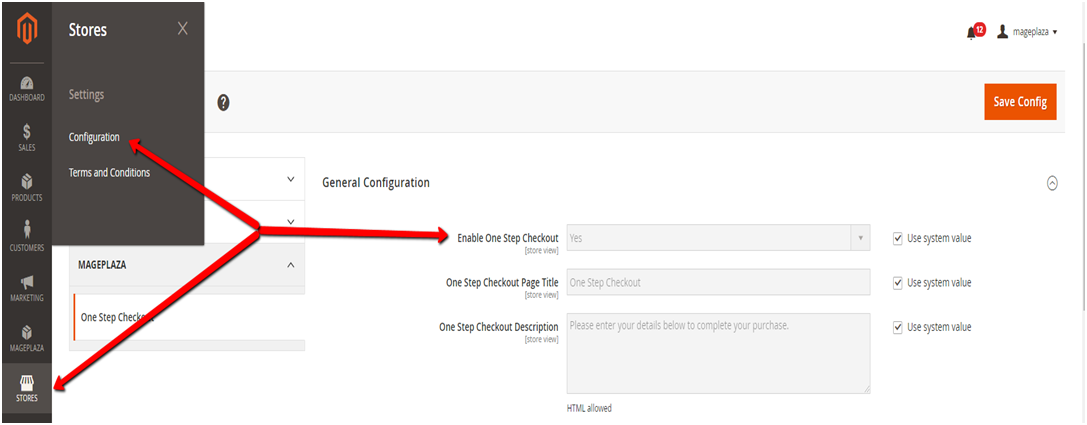
    • Step 1: Login into Admin.
    • Step 2: Choose Store/configuration.
    • Step 3: Open Mage monkeys tab.
    • Step 4: Choose the extension which you want to disable.

    Step 2: Next step is to Disable via command line

    If in case step 1 is not working then do this activity by command lines

    Before doing this step, make sure that you know how to run command lines.

    It has nothing to do with our extension or in general with any other extension. If you come across an error like “ Cannot write “,”Permission denied “, Php is not a command” then you have to contact your developer or host provider.

    Generally, you should run the following commands to disable an extension:

    In this case, we will disable Magemonkeys_Osc

    php bin/magento module:status ##to list all installed modules

    php bin/magento module:disable Magemonkeys_Osc

    php bin/magento cache:flush

    php bin/magento cache:clean

    As per requirement, you can also run module:status again to see if the extension is actually disabled.

    If you have Redis, Varnish in cache then first clear it off and then deploy it the need arise

    To ease the investigation process you can write down the step that you have done during installing the extension process, take a screen shot of the error and then send it to us.

    We will get back to you.

    How To Overcome Magento Issues Without Impacting On The Business?

    Magento issues need some quick fixation so that it does not interfere with business development hence below we have mentioned some major issues which will not come in the way to eCommerce success.

    Conflicts in Magento Extension

    The key benefit of this platform is that you can customize Magento in order to keep up with the business needs. The custom extension will add required features and it might also result in losing a piece of functionality or even fatal errors.

    Here, you might have a question that how many Magento extensions are needed?

    Well, the quality matters the most not the number of extensions. If you have one poorly coded extension then it can damage your store’s malfunctioning. The scope for conflicts increases if more extensions are installed.

    Some rules you need to follow if you want to minimize the risk of an extension conflict:

    • Always remember extension is very important for your store and the functionality never goes out-of-the-box in Magento.
    • Before deploying it in a functional store make sure you install an extension in a testing environment.
    • Entrust extension installation to skilled Magento developers who will review the code properly.
    • To prevent troubleshooting at a later stage, check for conflicts once an extension is installed.

    Magento speed issues

    Speed is one of the most important aspects for Magento store owners and we just can’t ignore this issue. If we are shopping online then we want the website to load in 2 seconds or less and with Magento, you can achieve this.

    By default, Magento is not slow, its operation speeds down because of improper configuration. A small delay in page load translates into a potential customer leaving for a competitor so to increase a page load speed we have mentioned a number of optimization tips:

    • Hardware is a must Magento power cannot be handled by the shared hosting so you need a fully dedicated server or a VPS (virtual private server).
    • Utilize Varnish and Full Page Caching to increase the speed of your Magento website.
    • Enable flat catalog As Magento stores catalog data comes with multiple tables making which is why MySQL queries are long and complex on the other hand flat catalog creates new tables on the fly which reduces query complexity. Due to which catalogs with around 500K+ SKUs can be indexed quickly.
    • Merge CSS and JavaScript files making your web pages lighter.
    • Enable caching reduces the number of database operations required for each page request.
    • Use Optimize images as heavy images take too much time to load
    • Optimize the website for mobile in the era of smartphones you will see a huge amount of traffic in mobile digital media.

    A business owner’s intention to speed up Magento performance is natural but doing so randomly might risk creating more issues than solving them. An experienced Magento developer will always check an online store for speed-slowing factors and efficiently address them.

    Magento security issues

    In 2015, nearly seven thousand Magento stores were under the massive cyber-attack and they all were caused by Guruincsite malware. Hackers focus on the Magento eCommerce website as the site contains customers’ personal and payment information. If a website is compromised in many ways then it may have a negative outcome on both the customer and the merchant. Your customer will suffer from financial loss and identity theft and this will not only keep them away from your online store but also sue it.

    Do not ignore security issues as you might face lawsuits, penalties, and revoked privileges that will harm your reputation. Always make a point to scan your site on regular practices so that your system to fully up to date with security patches.

    Keep your business unaffected from Magento issues:

    Any time an uncertain Magento issue may arise that does not mean you can’t meet your eCommerce requirement. Business owners can prevent these issues or solve them if they take action promptly.

    Below are some fundamental requirements for a flawless Magento store operation:

    • Periodic Magento Maintenance
    • Required Customization
    • Standard security testing
    • Contact Magento expert in case of malfunction

    As we have stated, Merchants should be fully aware of these critical issues in order to prevent them. Perform Magento performance optimization service with the help of experts to overcome Magento issues.

    How Popular Is Magento? Facts & Statistics

    Currently, Magento is the most popular Ecommerce platform in the world since its launch in 2008. According to the Magento website, more than 250,000+ online stores domains run on Magento including some of the leading brands like Samsung, Ford, and other well-known brands.

    Magento is a versatile platform that offers marketing and promotion of various brands. It also focuses on Mobile Commerce offering responsive designs. It has a large number of products on one site with a possibility to handle more than 80,000 orders per hour.

    The main problem for Ecommerce business is abandoned shopping carts and it happens when the customer adds items to their shopping cart without buying those items. Based on online shop statistics, the amount of buying users is great. 10% exited the website from the shopping cart while 41% made the purchase.

    There have been more than 700,000+ Magento downloads by 2020 and it keeps on increasing to date.

    There are a numbers of reasons why people choose Magento for their online stores and we have gathered statistics which proves that Magento is really a popular Ecommerce platform.

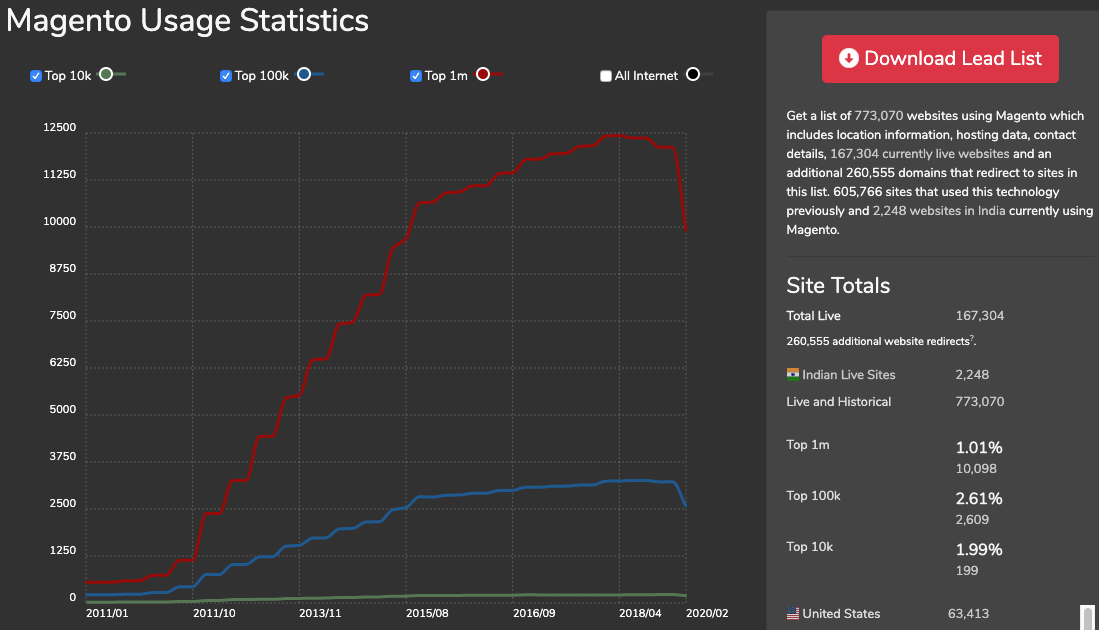
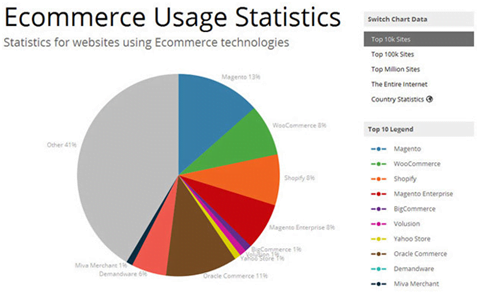
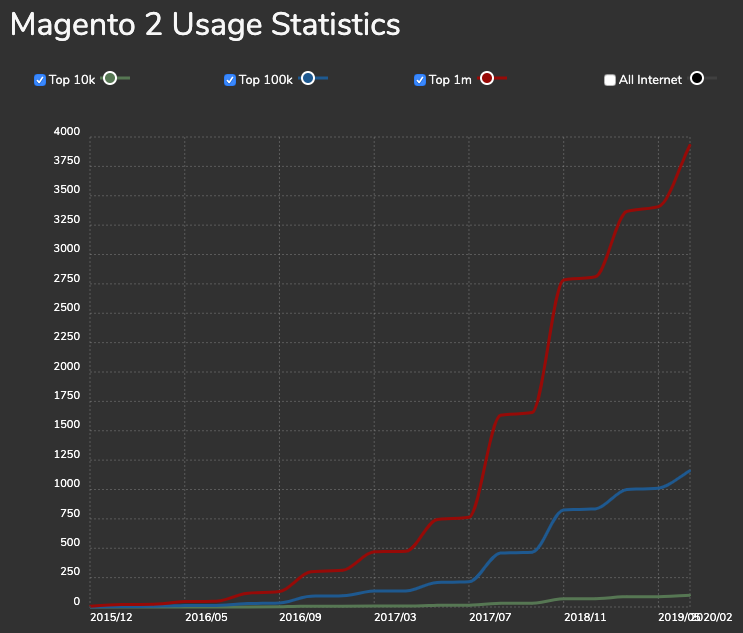
    Magento Usage Statistics:


    Source: trends.builtwith.com

    13% of the entire website which content management system use Magento. Hence we can call it a “Legend” of the Ecommerce world. From the beginning, Magento has gained more and more popularity.

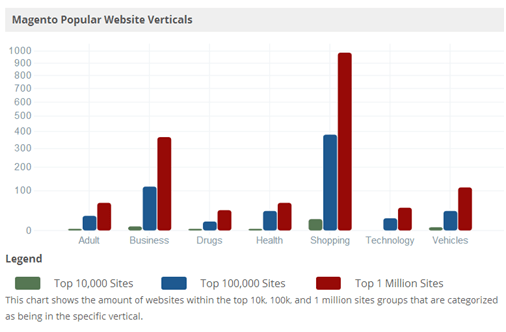
    Source: trends.builtwith.com

    With 31% of market share, Magento has become the most renowned and used Ecommerce platform. Based on Alexa ranking of 2015 it was among the top 1 Million websites where Magento has been used by 26% of them.

    Source: trends.builtwith.com

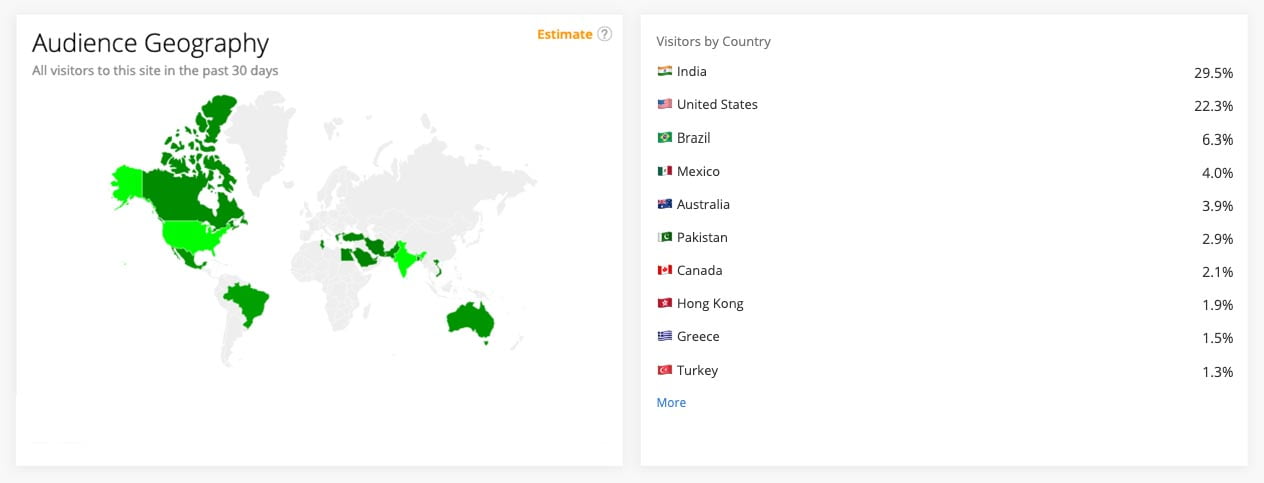
    The Magento community is constantly growing. As mentioned below, Magento rank statistics by countries that are mostly oriented on Magento development websites.

    Source: www.alexa.com [2020]

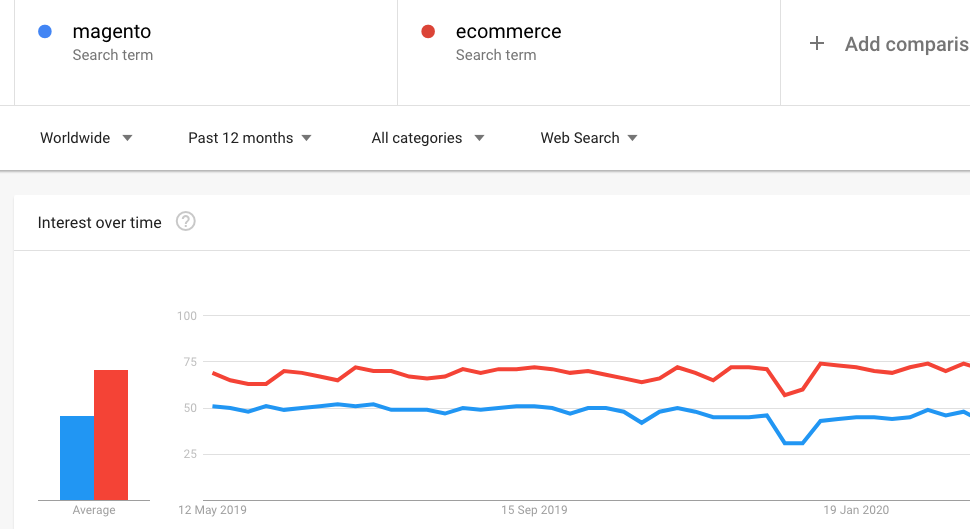
    From the above statistics, you can say that the word “Magento” is searched on Google is more often than the word “Ecommerce” since 2008 which does not surprise us at all.

    Source: trends.google.com [2020]

    With each passing year, Magento is becoming more and more professional and used platform by a large number of people. Magento 2 and later the Magento 2.1 the downloads are growing steadily and used by many business websites.

    Conclusion

    The above-provided statistics are just to illustrate how Magento is one of the best Ecommerce platforms with the comparison to working on other platforms. It wouldn’t have been so popular if the web development features it offers and the quality. It can handle a wide range of traffic and operate with high performance.

    There is your answer to the question from the title – yes a lot, to quote some of the real-world numbers from Magento’s official website:

    • $25 Billion in Transactions
    • 30,000+ Merchants
    • 2000+ extensions
    • 1.5 Million downloads

    And counting.

    According to a detailed report by Builtwith, In 2020, Magento is

    • 6th most popular in India in Open Source category.
    • 3rd most popular in the Top 10k sites in Open Source category.
    • 4th most popular in the Top 100k sites in Open Source category.
    • 5th most popular in the Top 1 Million sites in Open Source category.
    • 9th most popular on the Entire Internet in Open Source category.
    • 5th most popular in the United Kingdom in Open Source category.
    • 5th most popular in Israel in Open Source category.
    • 5th most popular in the Netherlands in Open Source category.
    • 5th most popular in UAE in Open Source category.
    • 5th most popular in Australia in Open Source category.
    • 6th most popular in India in eCommerce category.
    • 3rd most popular in the Top 10k sites in eCommerce category.
    • 4th most popular in the Top 100k sites in eCommerce category.
    • 4th most popular in the Top 1 Million sites in eCommerce category.
    • 10th most popular on the Entire Internet in eCommerce category.
    • 2nd most popular in Saint Helena in eCommerce category.
    • 3rd most popular in the Netherlands in eCommerce category.
    • 3rd most popular in Croatia in eCommerce category.
    • 3rd most popular in Slovenia in eCommerce category.
    • 4th most popular in Denmark in eCommerce category.

    What is your experience with Magento? Do these statistics hold true for your business? Do let us know.

    How much does it cost to create an eCommerce website with an app in 2021?

    The trend to shop online is increasing day by day which inspired many entrepreneurs to create a digital shop. It surely helps to save the physical outlet costs. Apart from that, it also helps to gain more customers which can lead to hike sales revenues. eCommerce business is not limited to big sharks like eBay, Amazon, Alibaba, Wal-Mart, & Craigslist, but even small retailers are taking advantage of eCommerce trends & technologies.

    Majorly all businesses impacted negatively due to corona pandemics in 2020. Many physical outlets had to turn down their shutters due to lockdown and countries. But, their eCommerce app & site worked like a vaccine for their business.

    Such reasons have cleared one thing that having an eCommerce web & app is not add-on for business, but a need.

    In this article we are going to talk about eCommerce pricing in 2021. With technological upgradation, the pricing has changed year-by-year. Unlike other article copies from the Internet, we are focusing on the pricing structure of specifically 2021, not from 2020 or 2019 or vice versa. These pricing are defined after reading multiple articles related to eCommerce 2021 trends.

    If you’re not having a web or app then you must be wondering how much will it cost to create one? In this article we’re going to discuss the price you have to pay to create and maintain your eCommerce site/app.

    Table of Contents:

    (1) Domain Name:

    • How much does it cost to book a domain name for an eCommerce business?

    (2) Hosting Plan:

    • How much will it cost to host an eCommerce store?

    (3) SSL Certificate:

    • How much does it cost for having an ssl certificate for your eCommerce store?

    (4) eCommerce Platform:

    • (4.1) How to choose the right eCommerce platform?
    • (4.2) Fixed costs of different eCommerce platforms.

    (5) Design:

    • (5.1) How much does it cost to design an eCommerce website? (UI/UX)
      • (5.1.1) Factors to consider while designing an eCommerce website.
      • (5.1.2) How many hours will it take to design an eCommerce web store?
    • (5.2) How much does it cost to design an eCommerce app? (UI/UX)
      • (5.2.1) How many hours will it take to design an eCommerce mobile app?
    • (5.3) Add-On: Web Design Trends to Adopt in 2021

    6. Development:

    • (6.1) How much does it cost to develop an eCommerce website store?
      • (6.1.1) How many hours will it take to develop an eCommerce web store?
    • (6.2) How much does it cost to develop an eCommerce mobile app store?
      • (6.2.1) How many hours will it take to develop an eCommerce app store?
    • (6.3) Add-On: Web Development Trends to Adopt in 2021

    7. Testing:

    • (7.1) How much does an eCommerce website testing cost?
      • (7.1.1) How many hours will it take to test an eCommerce website?
    • (7.2) How much does an eCommerce mobile app testing cost?
      • (7.2.1) How many hours will it take to test an eCommerce mobile application?

    8. Maintenance:

    • (8.1) How much does it cost for eCommerce website store maintenance service?
      • (8.1.1) How many hours can it take to maintain an eCommerce site?
    • (8.2) How much does it cost for eCommerce mobile app store maintenance service?
      • (8.2.1) How many hours can it take to maintain an eCommerce mobile app?

    9. Conclusion

    Let’s start discussing eCommerce websites costing step-by-step.

    (1) Domain Name: How much does it cost to book a domain name for eCommerce business?

    Every business has a physical address. Just like it, domain name is your digital address where you customer will land. There are different types of domain. TLD, ccTLD, GTLD etc.

    You need to choose a domain name which can cost you somewhere between 1-40 USD as per the below pricing structure.
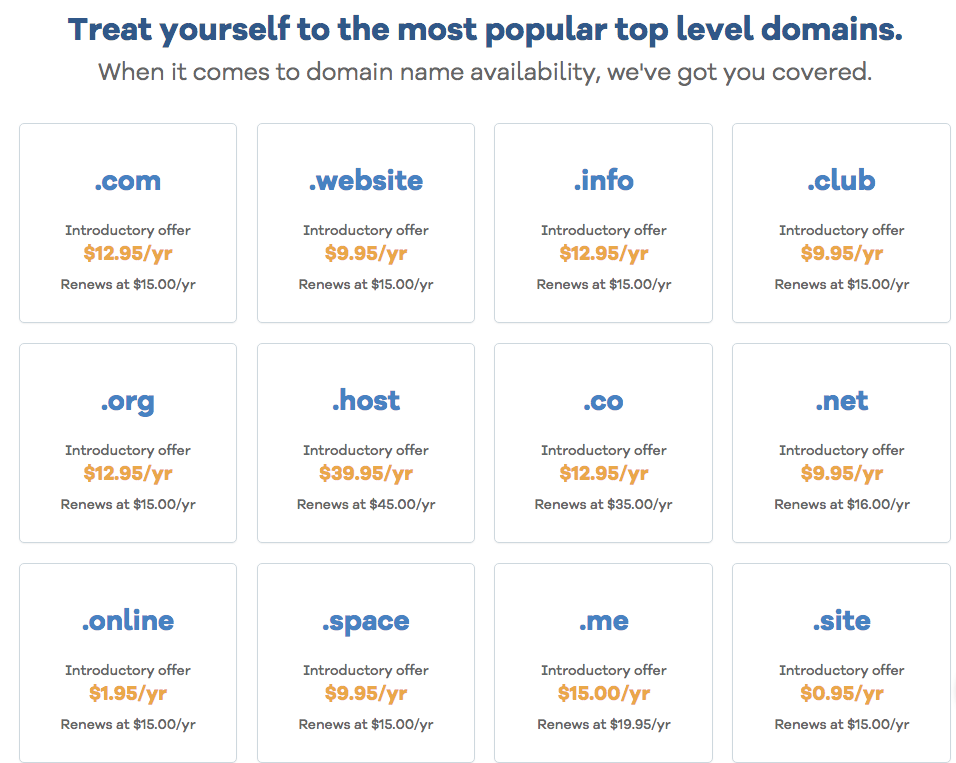
    (Source: HostGator)

    We will suggest you to book a .COM domain name that can cost you between 11-20 USD per year. Make sure you choose the right domain name that fits your business theme and helps you with SEO.

    (2) Hosting Plan: How much will it cost to host an eCommerce store?

    Let’s say you live in a flat no 12 in L block then L block is your hosting and flat no 12 is your domain name. You need to host your domain name. For that you need to buy a server. It cost

    differs from business to business. If you have 10000+ products then you need to choose dedicated hosting. If you have limited products then you can choose a shared server which is least advised. Average monthly pricing to host an eCommerce store lies between 5-100 USD
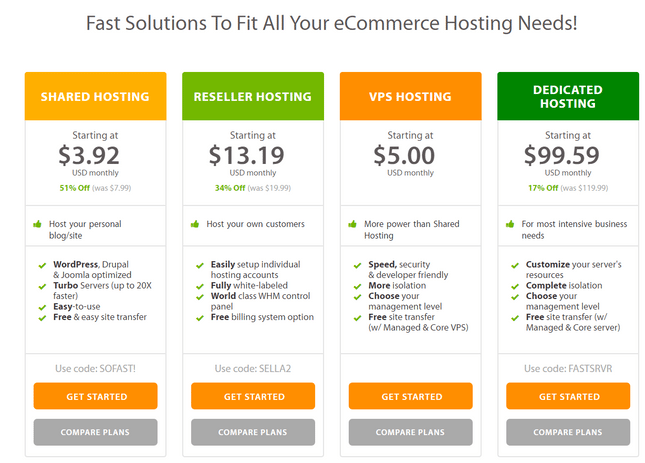
    (Source:websitebuilderexpert)

    Make sure you don’t compromise with hosting because it directly impacts your website loading speed which can impact on your sales. There are some SaaS based eCommerce platforms available in the market who provide a cloud-hosting built into the price of monthly or yearly subscriptions. If you choose to have your store in shopify then you don’t need to worry about choosing the right hosting partner.

    (3) SSL Certificate: How much does it cost for having an ssl certificate for your eCommerce store?

    SSL certificates are used to secure credit card transactions, digital data transfer & login-registration credentials. It is necessary for an eCommerce store to have the SSL because eCommerce sites are all about digital transactions. Major hosting plans don’t have SSL option, thus you need to opt for it separately. Below image will help you to understand how much an SSL can cost for a single site, multiple sites, or multiple subdomains etc?
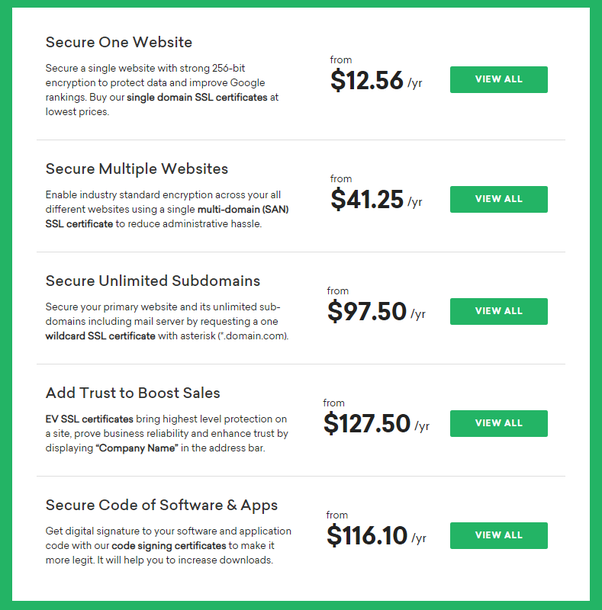
    (Source: Quora)

    An SSL certificate binds the domain name, server name or hostname. Google also considers SSL as a positive factor to gear up your search engine ranking positions. Thus, it’s advisable to not skip the installation of SSL for your site.

    Before proceeding further with design & development we would like to discuss choosing the right eCommerce platform as it plays a major role in eCommerce web & app development cost. There are numerous eCommerce platforms such as Magento, Shopify, BigCommerce, WooCommerce, OroCommerce, etc.
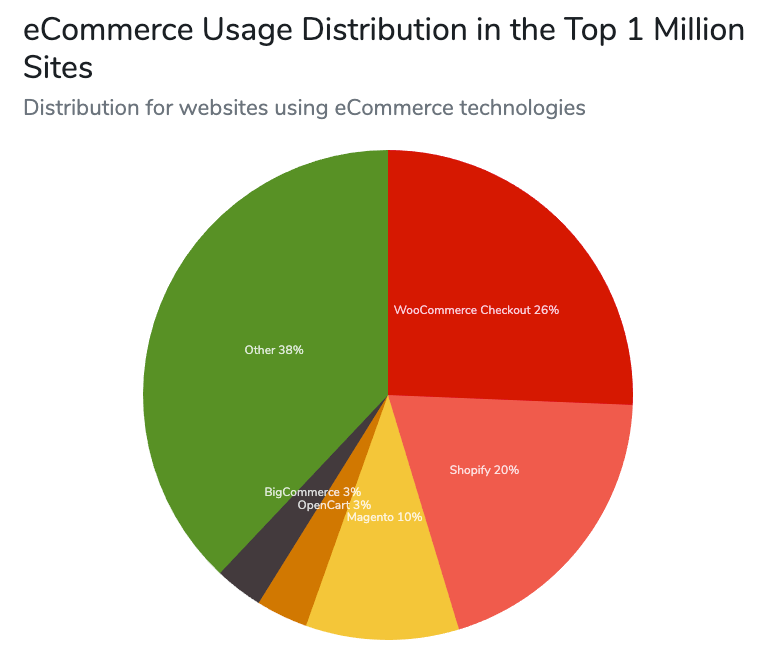
    (Source: Pagely)

    Let’s move to the next point and discuss
    (4.1)  eCommerce Platform: How to choose the right eCommerce platform?
    Let’s discuss the top 3 e-Commerce platform: (Shopify, WooCommerce, Magento)

    • If you are an entrepreneur or let’s say a startup with a limited economical budget who wants to sell limited products with less customisation then Shopify should be your choice. We suggest you visit http://www.shopysquad.com/ who works ONLY on Shopify technological development.
    • In case, if you’re a startup who has a budget to spend then WooCommerce offered by WordPress can be a good deal. WooCommerce is a good CMS platform which will help you to publish Search Engine friendly contents. Choose WordPressWolves. http://www.wordpresswolves.com/ is a core WooCommerce agency who can help you to give a digital curve to your eCommerce idea. They are a tech leader in giving WordPress & WooCommerce solutions with a wide range of portfolios from different domains.
    • If you’re an existing merchant who wants to leverage all eCommerce benefits or if you want to play eCommerce games on an enterprise level then Magento is the perfect choice for you to go ahead. It’s an open source software which can offer you a wide range of customisation is almost no limitation. In a nutshell, Magento is an all-inclusive eCommerce platform. If you trust by our recommendation, hire MageMonkeys.com to fulfil your Magento solutions needs. MageMonkey is a brand who has a pool of certified Magento experts who have experience in launching eCommerce projects in Magento from scratch.

    (4.2) eCommerce Platform: Let’s understand the fixed cost behind above eCommerce platforms:

    (Source: codeable.io)

    (5.1) Design: How much does it cost to design an eCommerce website? (UI/UX)

    Till now, we were communicating about pre-requirements, but the major process to construct an eCommerce will start with design. A web design is not as simple as it sounds.

    (5.1.1) You need to consider many factors in mind such as

    • Theme – You alway have two options with designing. Either you can buy a predesigned theme from any site or you can design it from scratch. Buying a theme may come with limitations, thus it’s advisable to hire a CREATIVE UI/UX designer to get the designing job done. Creating a design from scratch will allow you to do unlimited customisation for the lifetime.
    • Responsiveness – It’s no longer secret that Mobile users are having higher share compared to web users. The share of mobile users will increase more by 2021 which makes responsiveness an important factor to consider. Your design should look perfect from every different browser and every different device. It should not mess for different screen sizes. Your eCommerce store’s design should be responsive.
    • Integrating Designing with Development – Designing is a front face. But, what’s behind is your development code. Your designing should be easy to integrate with external eCommerce development platforms.
    • Lightweight – Your eCommerce store’s web design should be leight weighted. If it takes time to load then web user’s will bounce back. The images and other media should be reduced in size in such a way that they don’t compromise with visual quality.

    Apart from above, the web designer needs to focus on other web design factors such as visual appearance, ease of use, navigability, accessibility, interactivity etc.

    It’s suggestible to hire an experienced web designer. The designing cost depends on the number of hours taken by the designer to design ecommerce product pages, logo, homepage, mobile pages etc.

    (5.1.2) Design: How many hours will it take to design an eCommerce web store?

    Work

    Hourly Rate

    Timeline

    Final Cost

    Logo Designing

    10-20 USD

    5-15 Hours

    50-300 USD

    Homepage Designing

    10-20 USD

    30-60 Hours

    300-1200 USD

    eCommerce Product Pages Designing

    10-20 USD

    50-100 Hours

    500-2000 USD

    Responsive Designing

    10-20 USD

    50-100 Hours

    500-2000 USD

    UI-UX Changes

    10-20 USD

    30-80 Hours

    300-1600 USD

    Backend Designing,Other Page Designing, Testing,
    Bugs Solving, Other design changes etc

    10-20 USD

    40-100 Hours

    400-2000 USD

    (5.2) Design: How much does it cost to design an eCommerce app? (UI/UX)

    We already discussed the eCommerce store’s web design. But, app design is different compared with web design. Here the job is more creative. You need to design the app in such a way that it fits in all different devices which have different sizes. The designer you hire for web designing can perform the app designing task.

    App designing pricing depends on the type of app & hours taken to design the app. Refer below image to understand the approx pricing for your app.

    eCommerce app falls in the Complex app category.

    (5.2.1) Design: How many hours will it take to design an eCommerce mobile app?

    App Type

    Hourly Rate

    Timeline

    Final Cost

    Complex App (ONLY DESIGN)

    10-20 USD

    50-100 Hours

    500-2000 USD

    (5.2.1) Design: Add-ons: As we are talking about the costing of eCommerce in 2021, we would like to list nine trends from the designing industry that you should focus while designing the eCommerce website.

    • Parallax animation

    • Neomorphism

    • Abstract art compositions

    • Comfortable colors

    • Scrolling transformations

    • Digital interpretations of physical products

    • Captivating questionnaires

    • Three-dimensional colors

    • Material UI

    (6.1) Development: How much does it cost to develop an eCommerce website store?

    Development is a tricky game which shares the major part in creating an eCommerce website. Apart from executing programmatically work, it includes integrating designing, payment gateways, add-ons, and third party api & tools.

    (6.1.1) Development:  How many hours will it take to developer specific pages and how much they will be costing you.

    Work

    Hourly Rate

    Timeline

    Final Cost

    Authentication (sign-in page)

    10-20 USD

    20-30 Hours

    250-600 USD

    Catalog page

    10-20 USD

    40-50 Hours

    300-1200 USD

    Product details page

    10-20 USD

    40-50 Hours

    500-2000 USD

    Shopping cart page

    10-20 USD

    30-40 Hours

    500-2000 USD

    Checkout page

    10-20 USD

    30-50 Hours

    300-1600 USD

    About us

    10-20 USD

    05-15 Hours

    50-300 USD

    Customer Care (FAQ)

    10-20 USD

    05-15 Hours

    50-300 USD

    Contact Us page

    10-20 USD

    05-15 Hours

    50-300 USD

    CMS (Along with Blog setup with theme integration)

    10-20 USD

    50-100 Hours

    500-1400 USD

    Admin, Other Page Development, API Development,
    Coupon Module Development,
    Third Party integration Development,
    Other Custom development changes etc

    10-20 USD

    50-250 Hours

    500-5000 USD

    (6.2) Development: How much does it cost to develop an eCommerce mobile app store?

    Talking about eCommerce app business the mobile app should have functionalities such as sign-in (registration), social features, integrated payment gateways, equipped product catalogs, product pages, checkout system etc.

    (6.2.1) How many hours it will take to develop an eCommerce mobile app feature wise?

    Work

    Hourly Rate

    Timeline

    Final Cost

    In-App Search

    10-20 USD

    30-50 Hours

    300-1000 USD

    Shopping Cart

    10-20 USD

    50-100 Hours

    300-2000 USD

    Push Notification (With Personalization)

    10-20 USD

    30-50 Hours

    500-1000 USD

    Sign-in/ Sign-up (With Social Accounts)

    10-20 USD

    10-25 Hours

    100-500 USD

    Sharing Products with Open Graph Methodology

    10-20 USD

    10-25 Hours

    100-500 USD

    Database & Infrastructure Management

    10-20 USD

    50-100 Hours

    500-2000 USD

    Payment Integration

    10-20 USD

    50-100 Hours

    500-2000 USD

    Admin, Other Page Development, API Development,
    Third Party integration Development,
    Coupon Module Development,
    Other Custom development changes etc

    10-20 USD

    50-150 Hours

    500-3000 USD

    (6.3) Add-ons: Like designing world, the development industry has also changed time-by-time. You can adopt below eCommerce development technological trends in your future eCommerce store.

    • AI Chatbots

    • Single Page Application

    • Progressive Web Apps (PWAs)

    • Blockchain Technology

    • Accelerated Mobile Pages (AMP)

    • VR and AR

    • Voice Search

    (7.1) Testing: How much does an eCommerce website testing cost?

    Before proceeding further, let me ask you a question. What will happen to the world if the corona vaccine will go publicly without going on trial?

    It will be scary. Won’t be? Whether it’s a physical or digital product, a product should be launched after performing a proper testing. Websites and mobile apps should be tested in the same manner. Designers and developers make the site, but they are not users. They don’t think like users. Thus, to deliver a flawless user experience, it’s necessary to launch a site only after performing a usability testing.

    A Web & mobile app testing includes:

    • Functionality Testing

    • Usability Testing

    • Accessibility Testing

    • Performance Testing

    There are two ways to perform testing. Let’s understand the cost matrix along with timeline to test an eCommerce webstore

    Work

    Hourly Rate

    Timeline

    Final Cost

    Authentication (sign-in page)

    10-20 USD

    05-10 Hours

    50-200 USD

    Catalog page

    10-20 USD

    15-25 Hours

    150-500 USD

    Product details page

    10-20 USD

    15-25 Hours

    150-500 USD

    Shopping cart page

    10-20 USD

    10-20 Hours

    100-400 USD

    Checkout page

    10-20 USD

    10-20 Hours

    100-400 USD

    About us

    10-20 USD

    01-05 Hours

    10-100 USD

    Customer Care (FAQ)

    10-20 USD

    01-05 Hours

    10-100 USD

    Contact Us page

    10-20 USD

    01-05 Hours

    10-100 USD

    CMS (Along with Blog setup with theme integration)

    10-20 USD

    10-20 Hours

    20-400 USD

    Admin, Other Page Development, API Development,
    Coupon Module Development,
    Third Party integration Development,
    Other Custom development changes etc

    10-20 USD

    40-125 Hours

    400-2500 USD

    (7.2) Let’s move forward and understand the cost & timeline of performing testing on a mobile application.

    Work

    Hourly Rate

    Timeline

    Final Cost

    In-App Search

    10-20 USD

    10-20 Hours

    100-400 USD

    Shopping Cart

    10-20 USD

    10-20 Hours

    100-400 USD

    Push Notification (With Personalization)

    10-20 USD

    10-20 Hours

    100-400 USD

    Sign-in/ Sign-up (With Social Accounts)

    10-20 USD

    05-10 Hours

    50-200 USD

    Sharing Products with Open Graph Methodology

    10-20 USD

    05-10 Hours

    50-200 USD

    Database & Infrastructure Management

    10-20 USD

    15-30 Hours

    150-600 USD

    Payment Integration

    10-20 USD

    05-10 Hours

    50-200 USD

    Admin, Other Page Development, API Development,
    Third Party integration Development,
    Coupon Module Development,
    Other Custom development changes etc

    10-20 USD

    40-80 Hours

    400-1600 USD

    (8.1) Maintenance: How much does it cost for eCommerce website store maintenance service?

    Let’s say you build a house and start living there. Will it be okay if you won’t clean your house on a regular interval or won’t do pest control on a regular interval? What will happen to them?

    The answer is your house will look messy & smelly. Visitors will avoid coming to your place. Exactly the same can happen with your eCommerce web and app. If you don’t maintain your eCommerce website properly then web visitors will bounce back or avoid to visit it. In the case of eCommerce apps, THEY WILL UNINSTALL YOUR APP. That will be the high price you pay not for maintaining your eStore.

    Believe it or not, your eCommerce store needs maintenance service. You might be wondering what’s included in maintenance of eCommerce stores. Well, listing all tasks in below “eCommerce Web Monthly maintenance table”.

    Store Load Speed Testing

    Version Upgradation

    Extension Upgradation

    Regular Backup

    Security Patch Setup

    Basic UX/UI changes

    Server Maintenance

    Browser Compatibility Testing

    Store Troubleshooting

    Monthly Store Analysis

    Product Editing

    Theme Upgradation

    Traffic Stats and Analysis

    Store content updates

    Form Testing

    Link checking

    404 checking

    Image Replacement

    New Extension Installation

    & Many more

    Now, let’s understand how many hours can an eCom website store maintenance service take?

    Work

    Hourly Rate

    Timeline

    Final Cost

    All Tasks listed in eCommerce Web Monthly Maintenance Table

    10-20 USD

    40-60 Hours

    400-1200 USD

    (8.2) Maintenance: How much does it cost for eCommerce app maintenance service?

    Web maintenance and app maintenance holds different tasks. App maintenance tasks are different and tricky. Rare breed of app developer can perform it within a timeframe.

    Let’s understand what tasks are included in eCommerce app maintenance service.

    eCommerce Mobile App Monthly Maintenance Table

    Bug Fixing

    App Upgrade

    App Monitoring

    Regular Backup

    Database management

    Basic UX/UI changes

    Server Maintenance

    Reading App Console

    Store Troubleshooting

    Theme Upgradation

    Product Editing

    & Many more

    (8.2.1) Now, let’s understand how many hours can an eCommerce app maintenance service take?

    Work

    Hourly Rate

    Timeline

    Final Cost

    All Tasks listed in eCommerce Mobile App Monthly Maintenance Table

    10-20 USD

    40-60 Hours

    400-1200 USD

    (9) Conclusion:

    As we’ve already discussed the pricing of all aspects that impacts on eCommerce store development, it’s time to merge all the data and see the final pricing.

    #

    eCommerce Website Costs

    eCommerce Mobile App Costs (mCommerce)

    Domain Name Registration

    15-20 USD per Year

    NA

    Hosting

    5-100 USD per Month

    NA

    SSL Certificate

    13-130 USD per Month

    NA

    Design

    2000-9000 USD

    1000-5000 USD

    Development

    3000-14000 USD

    3800-12000 USD

    Testing

    1000-5200 USD

    1000-4000 USD

    Maintenance (Monthly)

    400-1200 USD

    400-1200 USD

    FINAL FIGURE

    6500-30000 USD

    6200 – 22000 USD

    Above figures vary as per the nature of your business and requirement. But mostly eCommerce websites & mobile apps can be developed under a given figure.